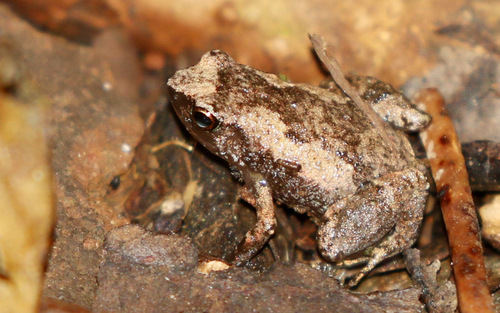
Stumpffia maledicta
Stumpffia maledicta is a small microhylid frog endemic to Madagascar, belonging to a genus of diminutive frogs known for their specialized ecological requirements. This species inhabits the eastern rainforests of Madagascar, where it occupies leaf litter and low vegetation in primary forest environments.
↓Decreasing
Population trend
Photo: (c) David Erterius, some rights reserved (CC BY-NC), uploaded by David Erterius
Taxonomy & Classification
Kingdom
ANIMALIA
Phylum
CHORDATA
Class
AMPHIBIA
Order
ANURA
Family
MICROHYLIDAE
Genus
Stumpffia
Stumpffia maledicta belongs to the family MICROHYLIDAE, order ANURA, within the AMPHIBIA class.
Species Profile
Stumpffia maledicta is a small microhylid frog endemic to Madagascar, belonging to a genus of diminutive frogs known for their specialized ecological requirements. This species inhabits the eastern rainforests of Madagascar, where it occupies leaf litter and low vegetation in primary forest environments. Like other members of its genus, S. maledicta is characterized by its small size and cryptic coloration that provides camouflage among forest floor debris. The species faces severe threats from ongoing deforestation and habitat fragmentation throughout Madagascar's eastern rainforest corridor. Agricultural expansion, logging, and slash-and-burn practices have resulted in significant loss of primary forest habitat essential for the species' survival. Climate change poses additional challenges, as altered precipitation patterns and temperature fluctuations can affect the microhabitat conditions required by this moisture-dependent amphibian. The species' limited distribution range makes it particularly vulnerable to local extinctions from habitat disturbance. Madagascar's unique biodiversity faces unprecedented pressure from human activities, with forest cover declining rapidly across the island. Conservation efforts for S. maledicta are primarily focused on habitat protection through the establishment and management of protected areas within its range. Research initiatives aim to better understand the species' ecology, population dynamics, and specific habitat requirements to inform targeted conservation strategies. International collaboration supports Madagascar's conservation programs, though implementation faces challenges from limited resources and competing land use pressures. The species' critically endangered status reflects the urgent need for immediate conservation action to prevent extinction.
Stumpffia maledicta faces severe threats from deforestation and habitat fragmentation caused by agricultural expansion, logging, and slash-and-burn practices in Madagascar's eastern rainforests. Climate change compounds these pressures by altering the moisture and temperature conditions essential for this small amphibian's survival. The species' restricted range makes it particularly vulnerable to local extinction from continued habitat loss.
Key Facts
Habitat & Distribution
Stumpffia maledicta inhabits the leaf litter and low vegetation of primary rainforests in eastern Madagascar. The species requires the humid microclimate conditions found in intact forest environments with dense canopy cover and abundant organic debris on the forest floor.
Threats
IUCN Red List: Critically Endangered
Stumpffia maledicta faces severe threats from deforestation and habitat fragmentation caused by agricultural expansion, logging, and slash-and-burn practices in Madagascar's eastern rainforests. Climate change compounds these pressures by altering the moisture and temperature conditions essential for this small amphibian's survival. The species' restricted range makes it particularly vulnerable to local extinction from continued habitat loss.
Annual & perennial non-timber crops
Fishing & harvesting aquatic resources
Mining & quarrying
Conservation Actions
Community Sightings
Report a sightingNo community sightings yet. Be the first to report!
Sources & Attribution
Data sourced from the IUCN Red List of Threatened Species. AI-enriched profiles generated by SpeciesRadar.