Species Explorer
Browse and search species from the IUCN Red List and GBIF.
54,666 species
Mutela franci
ENMutela franci
Altiphrynoides osgoodi
CRAltiphrynoides osgoodi
Altiphrynoides osgoodi faces severe threats from habitat destruction caused by agricultural expansion and livestock grazing in the Ethiopian Highlands. Climate change compounds these pressures by forcing the species to retreat to higher elevations where suitable habitat becomes increasingly scarce.
Mutela joubini
ENMutela joubini
Potadoma vogeli
ENPotadoma vogeli
Pseudocleopatra voltana
ENPseudocleopatra voltana
Mantidactylus zolitschka
CRMantidactylus zolitschka
Mantidactylus zolitschka faces severe threats from deforestation and habitat destruction across Madagascar, driven by agricultural expansion, logging, and human development. Climate change compounds these pressures by altering the temperature and moisture conditions essential for amphibian survival and reproduction.
Biomphalaria tchadiensis
ENBiomphalaria tchadiensis

Nectophrynoides wendyae
CRNectophrynoides wendyae
The primary threat to Nectophrynoides wendyae is habitat loss caused by the construction of the Kihansi Dam, which altered natural water flow patterns and eliminated critical spray zone habitats. The species' extremely restricted range in a single gorge makes it highly vulnerable to any environmental changes or potential disease outbreaks.
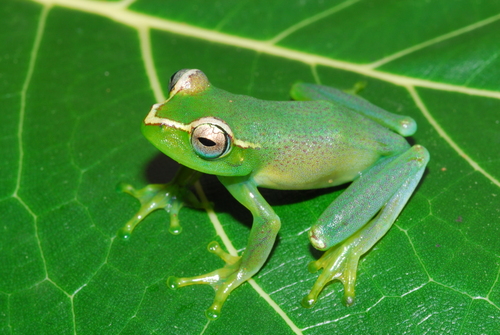
Boophis baetkei
CRBoophis baetkei
Boophis baetkei faces primary threats from deforestation and habitat fragmentation as Madagascar's eastern rainforests are cleared for agriculture and human settlement. Climate change compounds these pressures by altering the temperature and humidity conditions this forest-dependent amphibian requires for survival.
Capensibufo rosei
CRCapensibufo rosei
Rose's dwarf toad faces severe threats from habitat destruction due to urban development and agricultural expansion within its extremely limited range in South Africa's Western Cape Province. Climate change compounds these pressures by altering precipitation patterns and temperature regimes that are critical for the species' breeding cycles and habitat suitability.
Bulinus obtusus
ENBulinus obtusus
Eleutherodactylus erendirae
ENEleutherodactylus erendirae
Eleutherodactylus floresvillelai
VUEleutherodactylus floresvillelai
Eleutherodactylus jaliscoensis
ENEleutherodactylus jaliscoensis
Eleutherodactylus nietoi
ENEleutherodactylus nietoi
Hydriastele biakensis
ENHydriastele biakensis
Eleutherodactylus bartonsmithi
CREleutherodactylus bartonsmithi
Eleutherodactylus bartonsmithi faces habitat loss from deforestation and development that destroys the montane forest environments it requires. The species is also threatened by climate change impacts on forest humidity and the spread of chytridiomycosis, a deadly fungal disease affecting amphibians worldwide.
Eleutherodactylus chlorophenax
CREleutherodactylus chlorophenax
Eleutherodactylus chlorophenax faces severe threats from habitat destruction due to deforestation and development in Puerto Rico's mountain forests. The species is also vulnerable to climate change impacts and the fungal disease chytridiomycosis, which has caused widespread amphibian declines globally.
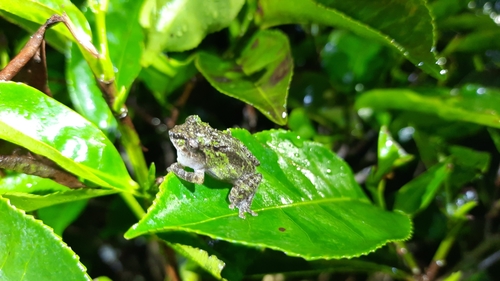
Philautus jacobsoni
CRPhilautus jacobsoni
Philautus jacobsoni faces severe threats from widespread deforestation and habitat conversion across Java's montane forests. Agricultural expansion, urbanization, and logging have dramatically reduced suitable forest habitat. Climate change and potential disease outbreaks pose additional risks to remaining populations.
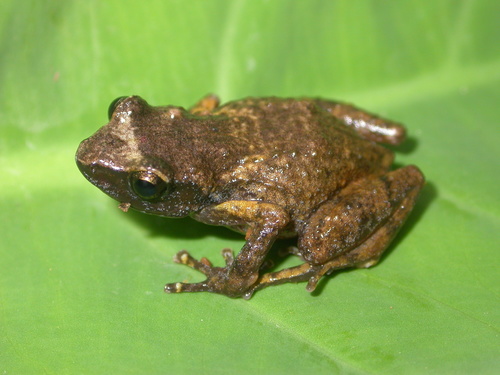
Eleutherodactylus manantlanensis
CREleutherodactylus manantlanensis
Eleutherodactylus manantlanensis faces severe threats from habitat destruction caused by agricultural expansion, logging, and human development in its montane forest habitat. Climate change compounds these pressures by altering the moisture and temperature conditions essential for this cloud forest species' survival.
Eleutherodactylus cubanus
ENEleutherodactylus cubanus
Eleutherodactylus tonyi
VUEleutherodactylus tonyi
Nasutixalus yingjiangensis
ENNasutixalus yingjiangensis
Papilio natewa
VUPapilio natewa
Megophrys rubrimera
ENMegophrys rubrimera
Chiloglanis camarabounyi
VUChiloglanis camarabounyi
Chiloglanis kolente
ENChiloglanis kolente
Chiloglanis kabaensis
ENChiloglanis kabaensis
Eleutherodactylus jaumei
CREleutherodactylus jaumei
Eleutherodactylus jaumei faces severe threats from habitat destruction caused by agricultural expansion, urban development, and deforestation throughout its Cuban range. Climate change compounds these pressures by altering forest conditions essential for the species' survival and reproduction. Additional risks include invasive species and potential disease outbreaks that could further devastate remaining populations.
Chiloglanis dialloi
ENChiloglanis dialloi
Chiloglanis loffabrevum
ENChiloglanis loffabrevum
Chiloglanis longibarbis
ENChiloglanis longibarbis
Chiloglanis pezoldi
ENChiloglanis pezoldi
Chiloglanis nzerekore
ENChiloglanis nzerekore
Chiloglanis tweddlei
ENChiloglanis tweddlei
Amphilius sp. nov. 'Konkouré River'
VUAmphilius sp. nov. 'Konkouré River'
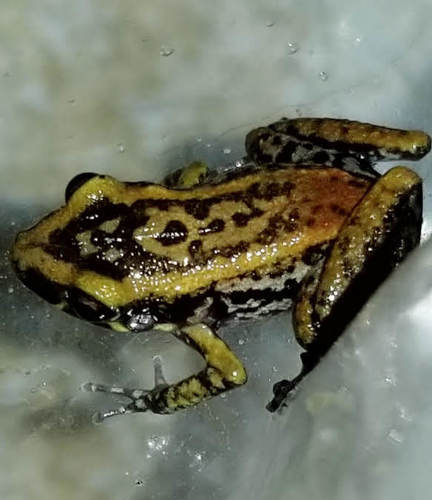
Eleutherodactylus limbensis
CREleutherodactylus limbensis
Eleutherodactylus limbensis faces severe threats from habitat loss due to deforestation, agricultural expansion, and urban development within its limited range. Climate change compounds these pressures by altering the humid microenvironments essential for the species' survival. Invasive species may also disrupt native ecosystems and directly impact frog populations.
Eleutherodactylus pezopetrus
ENEleutherodactylus pezopetrus
Gonystylus keithii
VUGonystylus keithii
Amphilius sp. nov. 'Kokoulo River'
ENAmphilius sp. nov. 'Kokoulo River'
Amphilius sp. nov. 'Senegal River drainage'
VUAmphilius sp. nov. 'Senegal River drainage'
Amphilius sp. nov. 'Little Scarcies drainage'
ENAmphilius sp. nov. 'Little Scarcies drainage'
Amphilius sp. nov. 'Niger River drainage'
ENAmphilius sp. nov. 'Niger River drainage'
Amphilius sp. nov. 'Moa River drainage'
ENAmphilius sp. nov. 'Moa River drainage'
Amphilius sp. nov. 'Loffa River drainage'
ENAmphilius sp. nov. 'Loffa River drainage'
Amphilius sp. nov. 'St. Paul River drainage'
ENAmphilius sp. nov. 'St. Paul River drainage'
Amphilius sp. nov. 'St. John River drainage'
ENAmphilius sp. nov. 'St. John River drainage'
Enteromius foutensis
ENEnteromius foutensis
Enteromius sp. nov. '1 - Upper Konkoure River basin'
ENEnteromius sp. nov. '1 - Upper Konkoure River basin'
Eleutherodactylus blairhedgesi
CREleutherodactylus blairhedgesi
Eleutherodactylus blairhedgesi faces severe threats from deforestation and habitat degradation throughout its limited range in Haiti. Agricultural expansion, charcoal production, and human settlement have resulted in extensive forest loss, leaving only fragmented patches of suitable habitat. Climate change compounds these pressures through altered precipitation patterns and rising temperatures that may exceed the species' tolerance limits.